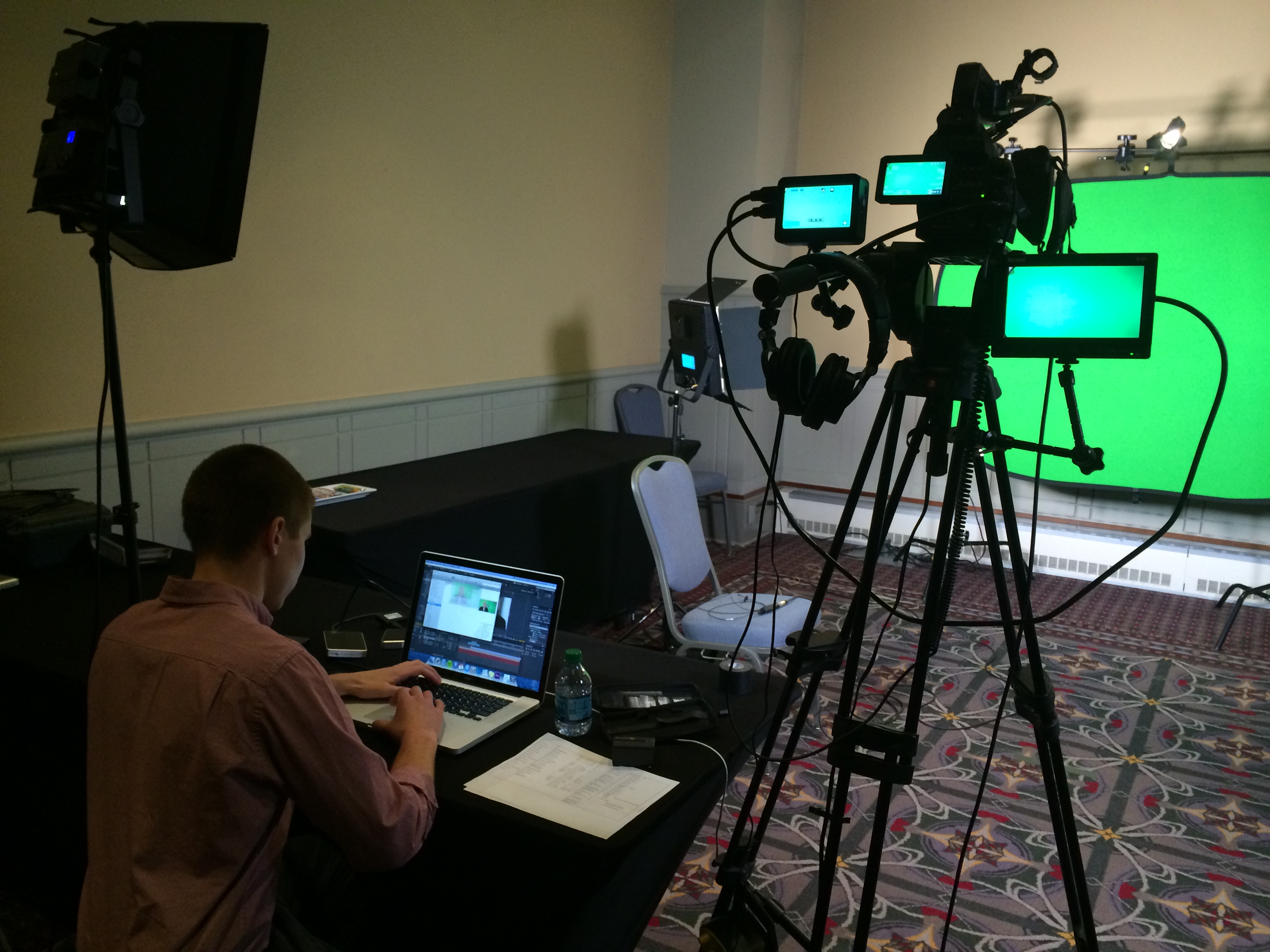
We first worked with the American Educational Research Association (AERA) on conference video coverage back in 2014. The approach then was traditional and labor intensive: high production expert interviews shot against green screen, with each subject composited onto licensed stock footage afterward.
It looked polished. It also wasn't cheap. That round of work produced 18 videos, and green screen editing does not come cheap: every video carried a real production cost once you factor in swapping backgrounds and licensing stock footage.
After doing a few years of this type of video, we stopped doing them. For the number of views, it probably wasn't worth the cost and both AERA and we could see that. But we stayed in touch with AERA, still kept doing periodic projects for them and came back years later with a very different plan.
The Reset
A few years later, AERA was ready to revisit their content approach. We came back informed by what we'd learned working with other clients in the meantime, plus a simple belief: stepping away from a client for a season and returning with fresh eyes tends to produce better work than staying in the loop indefinitely.
This time, the goal wasn't just high profile speaker interviews. AERA also wanted member stories: testimonials from the people who actually pay dues to belong to the organization. That's the material that helps staff make the case internally for why members should keep renewing and keep coming back to the conference.
The Setup That Worked
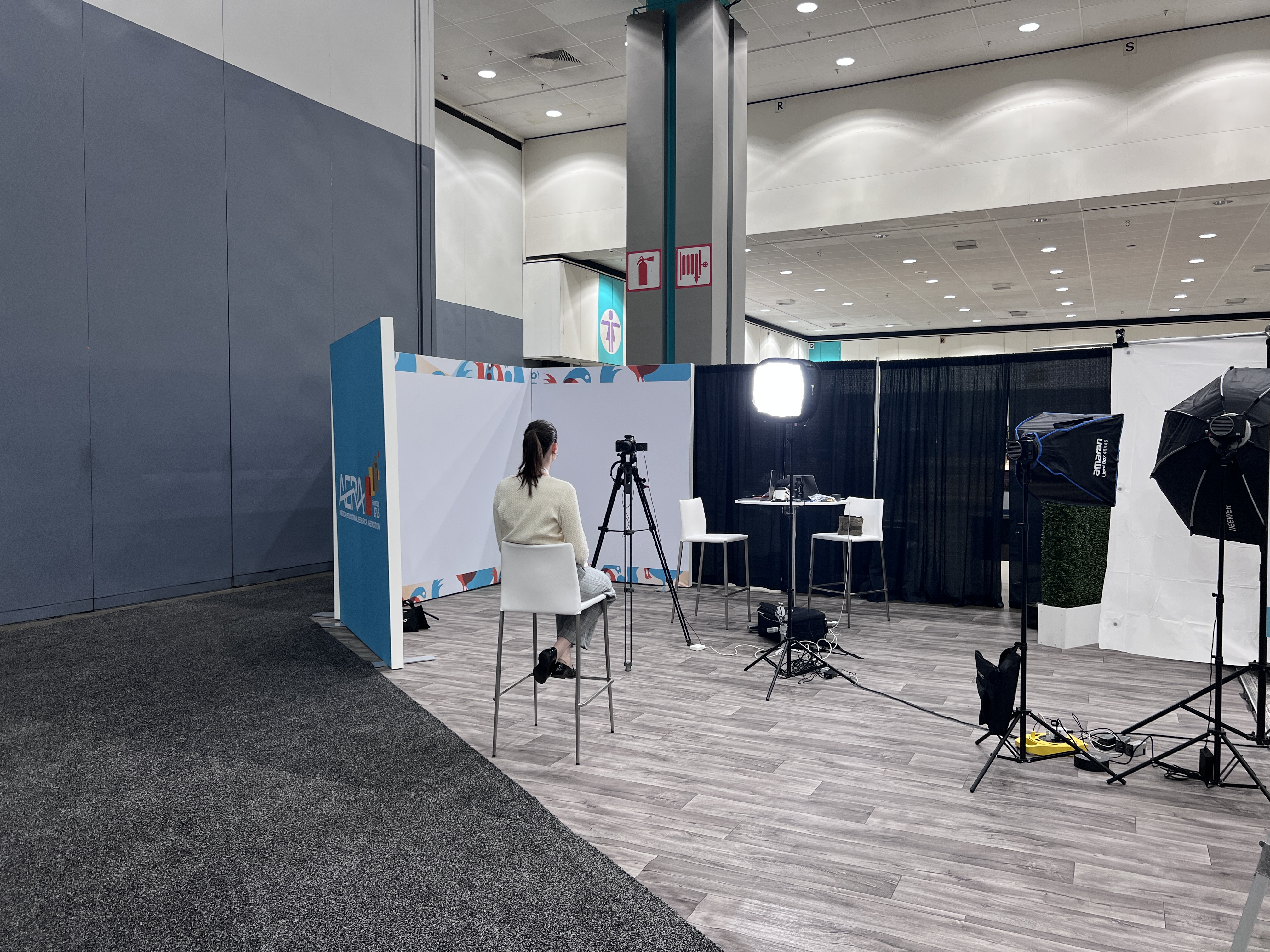
We setup a video booth and staffed it across several days of the conference, in a high visibility location, deliberately placed next to a separate photo booth offering free headshots. Pairing the two creates crossover traffic. Some attendees showed up thinking they were in line for a headshot and ended up giving us a full testimonial instead. One attendee only realized his mistake after answering every question we asked him: "Oh man, I thought I was just getting a headshot", he said. That's next door", we told him. He still gave us a great video.
The other piece that made the booth work: a sign with a QR code linking to a sign up page, where attendees could book a specific time slot. Presenters often want to record after their session rather than before, when they're calmer, and a sign up sheet lets people commit to a later slot instead of us chasing them down. Because sign ups captured email and phone number, we could also text people directly to reschedule if they were running late.
The Results
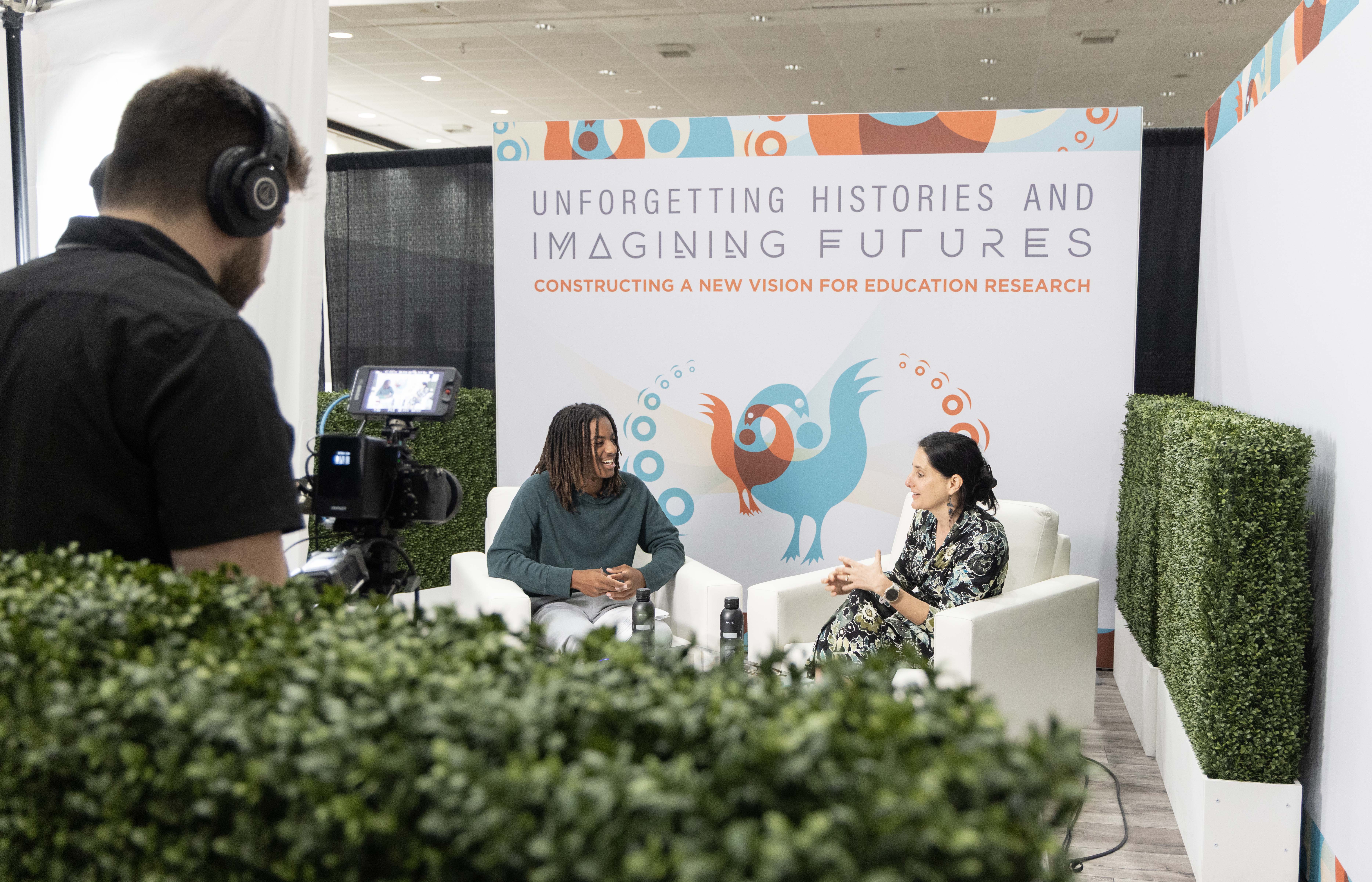
AERA told us going in that 30 solid interviews would be a good outcome. We delivered 52. Alongside the booth interviews, we produced a series of an on-site podcast conversations with experts, including a younger, up and coming scholar brought on to help the content resonate with a younger audience.
From all of that raw footage, AERA produced four long-form podcast videos plus a much larger volume of short form clips, and the short form content is what drove the bulk of the views, comments, and engagement.
Volume vs. Polish
This is the part we think matters most for other communications directors. When the goal is engagement and reach rather than a single polished flagship piece, quantity and variety of faces tends to outperform a small number of highly produced videos.
In 2014, that heavier approach bought AERA 18 videos. This time, for about a quarter of that budget, AERA walked away with more than 100 pieces of content, and generated meaningfully more engagement in the process.
Building Internal Capacity
AERA had an in house editor, so rather than keeping all the editing work with us long term, we introduced their team to Opus Clip to streamline short form editing. Part of our value here wasn't just producing the content ourselves. It was staying current on tools and platforms in this space, which change constantly, and translating that into a workflow their own staff could run.
The net result: AERA went from 18 videos to more than 100, at roughly a quarter of what the original approach cost, with their internal team handling the editing.